

Matthew Vines is not my Judge and Jury
Whether I was born this way was never the question.

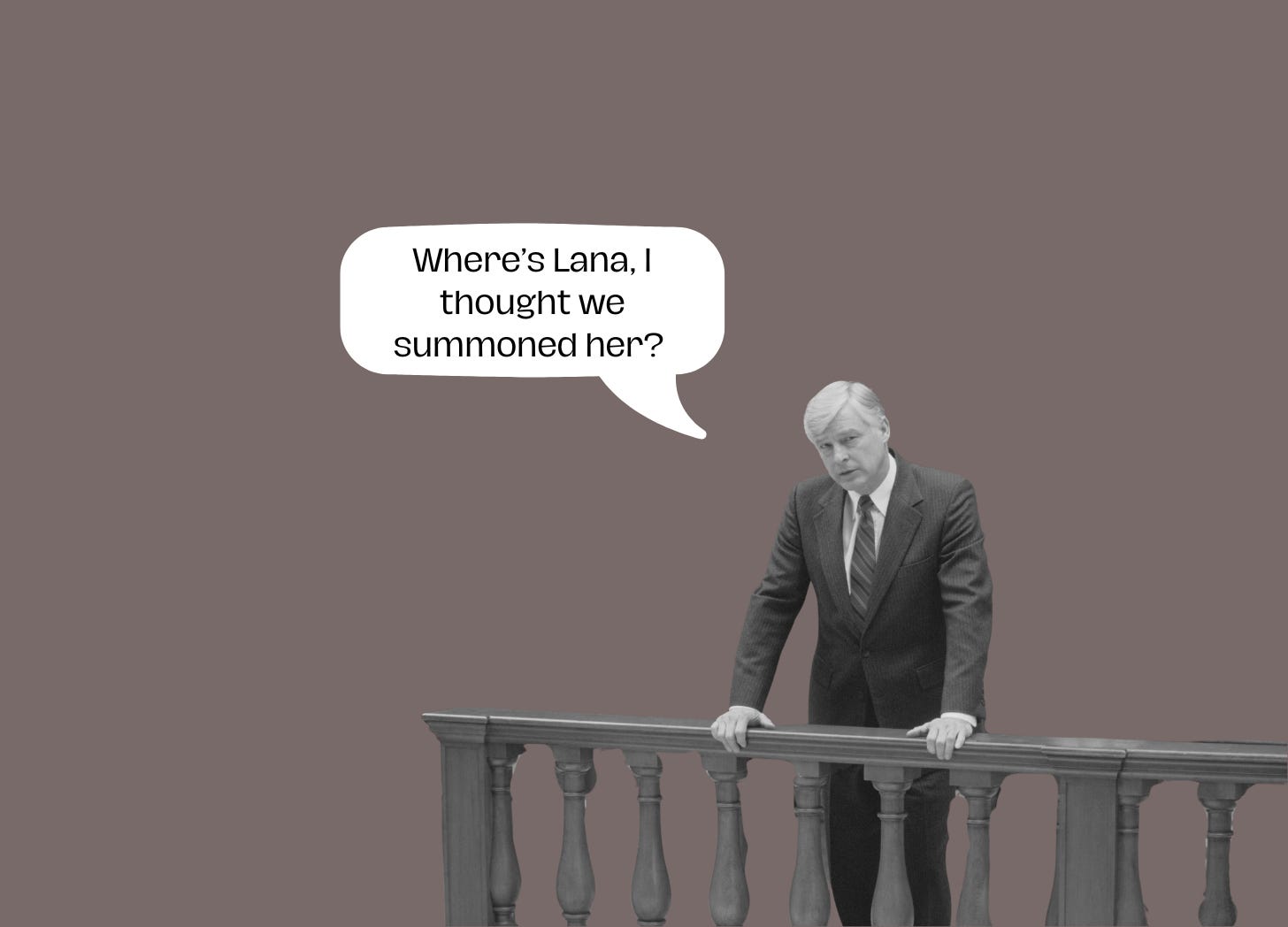
On June 30, I published a guest essay for Pride Month about loving Jesus as a queer, trans woman, and about how those two things have never once fought each other. On the same day, Matthew Vines published an op-ed in the New York Times arguing that people like me are the reason people like him are losing ground.
I am not usually someone who responds to articles from inside the community. Public disagreement between queer people is a spectator sport for people who want all of us gone, and I have no interest in selling tickets. But Vines has now come after my direct community more than once, first in a 2023 conference talk that framed queer and trans theology as a threat to faithful Christians, and now in the Times, where polyamorous people and gender-nonconforming people appear only as evidence of an illegitimate elasticity that is costing the “real” gays their acceptance. And the responses I have seen from the wider progressive community, well-meaning as they are, keep defending queerness from inside the very frame that produced the attack. The clearest exceptions I have seen are my fellow trans sisters Billie Hoard and Celeste Irwin, whose live conversation named the respectability politics underneath the op-ed, and who said out loud what the frame requires: it wasn’t a choice, but if it were, they would choose it ten times out of ten. They have a way with words that I don’t, and my writing tends to be more dense and less accessible. I’m often jealous of their ability to just say things plainly and clearly. But please bear with me as I want to pull on that thread until the whole garment comes apart.
The courtroom
Underneath the argument about words, here is what his op-ed actually builds: a courtroom.
There is a charge, which is that our existence as queer, trans, polyamorous people damages the survival of assimilable gay people.
There is a standing rule, which is that only those who were “born this way” get to be plaintiffs, while the rest of us are permanent defendants.
There is an evidence standard, which amounts to polling trends and the word “correlation” doing more work than it can bear; he concedes in his own piece that the backlash is part of a larger ramping up of culture-war populism, and then proceeds as though my pronouns did it.
And there is a judge, the approval of the same religious and political center that spent decades trying to erase him.
I have been put in this courtroom without my consent, accused of damaging his existence. A man with a fucking New York Times platform has cast himself as the fragile one, endangered by an intersectional woman, me.
But the courtroom is not the deepest problem. The deepest problem is the law it runs on.
What “born this way” concedes
“Born this way” sounds like a defense, and for a long time it worked like one. But listen closely to what it concedes. If my innocence rests on my inability to be otherwise, then the underlying moral question has already been settled against me. The logic underneath it says that the love, the body, the self would have deserved punishment if they had been chosen. That is not an acquittal; it is a plea deal.
Every argument from inherency* quietly signs that agreement. And a permission that rests on incapacity can be revoked the moment someone decides you could help it after all. That is exactly the move being made against trans people right now, whose transitions get reframed as ideology, as contagion, as choice. It is exactly the move Vines makes against polyamorous people, who have no “born this way” to hold up and are therefore, in his frame, disposable. The shield was never going to protect everyone, because the shield itself agrees with the accusation.
So let me say the thing I have not seen said. Whether I was born trans is not the argument for whether I am allowed to exist. My dignity is not conditional on a diagnosis of helplessness. If I had chosen every part of this, the name, the body, the love, I would deserve exactly the same dignity, because dignity that depends on your nature being involuntary is not dignity. It is parole.
Inherency: the idea that a trait is a built-in, unchangeable part of who you are, something you were born with rather than something you chose or grew into. “Born this way” is an inherency argument.
The armor is real
I want to be careful here, because “born this way” was not a mistake made by foolish people. It was armor. It was raised by people for whom the alternative was annihilation, it saved lives, and I have worn it myself. “God made me this way” carried me through rooms I would not have survived without it. So let’s be very clear: I am standing inside the crowd that sheltered behind it. Any critique of the armor has to honor the fear that built it, or the critique becomes its own kind of cruelty. Vines never honors that fear when he looks at queerness. He pathologizes it, and I do not want to make his move with the personnel swapped.
But armor you are never allowed to take off stops being armor and becomes a cage. Somewhere along the way, a survival strategy got promoted to a theology, and now an entire generation is being told that their worth hangs on winning an argument about etiology*. I am done hanging my worth there.
Etiology: a technical word for the study of what causes something, where it comes from. Arguing about the etiology of queerness means arguing about why someone is queer instead of whether they should be treated with dignity.
He already broke the law he wants to try me under
Isn’t it ironic that Vines’ own affirming case exists only because he made the kind of interpretive move he now prosecutes? He escaped the plain-sense reading of the prohibition texts by arguing they were culturally conditioned, that the enduring principle was covenantal love rather than the surface rule. That is a norm-questioning reading, the exact same interpretive machinery every liberationist reading runs on. He and the queer theologians he denounces sit on the same side of the deepest methodological line, and they differ only in where they choose to stop.
But I am not actually asking to win the case, because winning still concedes that my existence was a triable proposition. Here is where I part ways not only with Vines but with some of the theology that formed me. The demand that I be justified by the text before I am allowed to exist is itself the violence. Affirming theology, for all the good it has done, and it has done me real good, accepted that demand. However,“The Bible affirms me” answers a summons and at the same time keeps the courtroom in business. And a venue that can acquit can also convict. Vines simply walked back through the door that was left open and started narrowing the acquittal. I have answered that summons myself, more times than I want to count. The reason we do it, I think, is that the room is warm, the arguments are winnable, and the alternative feels like exile.
However, the stronger refusal is much shorter: You do not get to try me. Scripture is a tool for meeting God. It is not the tribunal where I petition to exist. Those are different rooms, and the whole weight of the weaponized Bible depends on us never noticing the difference.
To the ones his piece was written to expel
If you are polyamorous, or nonbinary, or trans, or any of the people whose existence does not come with a tidy origin story, you have been told, sometimes by our own movement, that you are its weak seam, the exposed flank, the reason we cannot have nice things (there’s a Pauline sentence for you). You are not the weak seam. You are the testimony. Your life is proof that our worth was never located in what we could not help. It lives in what we choose and keep choosing, in covenant, in fidelity, in the open question we are brave enough to keep living inside. The people who need an inborn essence to point at cannot account for you, and that is not your failure.
You may be tempted to defend your existence by saying that generations of people have had gender and sexual experiences like ours. But as true as that is, that’s not the point. The point is that you don’t have to defend yourself. You are valid whether there is a long history that precedes you (It does) or not. You are valid whether Scripture talks about you (it doesn’t) or not. You are valid whether the patriarchy has influenced centuries of worldviews (It did)or not.
I was summoned to a courtroom on the same day I published an essay about a God who has never once asked me to defend my existence.
I am declining the summons.