


Wow, it’s already February. I don’t know about you, but I feel like I’ve lived a whole life in this month alone.
I’ve received a tiring number of inquiries about what I’m planning to do to address the state we’re in. And I’ve seen a tiring number of surprised faces every time I say that I’m going to stay present and focus on joy as a form of protest. I’m not trying to minimize what’s going on in the world, but I can’t help being upset that all this time my voice has not been heard. Every time I’ve led a workshop, spoken in a church, or posted something here on Substack or elsewhere, I have mentioned all my intersectional identities. Within those identities, I embody the state of today’s world every day.
At the risk of over-explaining the obvious, here’s the list of identities I show up with in this world:
I’m a woman, living in a patriarchal society.
I’m transgender, and while my identity was relatively safe among democrats, that’s starting to break down as well.
I’m Asian, specifically Indo. More often than not, I’m told that I don’t look Asian. I’ll let you figure out how that’s erasing.
I’m Jewish, and for some reason, I have to explain that I’m against bombing children every time I share my religious heritage.
I’m autistic and have OCD. I have to work so hard to simply be perceived in this world.
I have deep-rooted PTSD. I lived through a war, had extremists murder close family friends, and lived through years of sexual abuse.
I’m an immigrant, which has been something I’ve been more painfully aware of.
In my workshops, I explain that having all these intersectional identities is not a scale of how bad I have it. It just helps explain what my social location is. Think of each of my identities as a Venn diagram, and where all circles meet—that’s my social location.
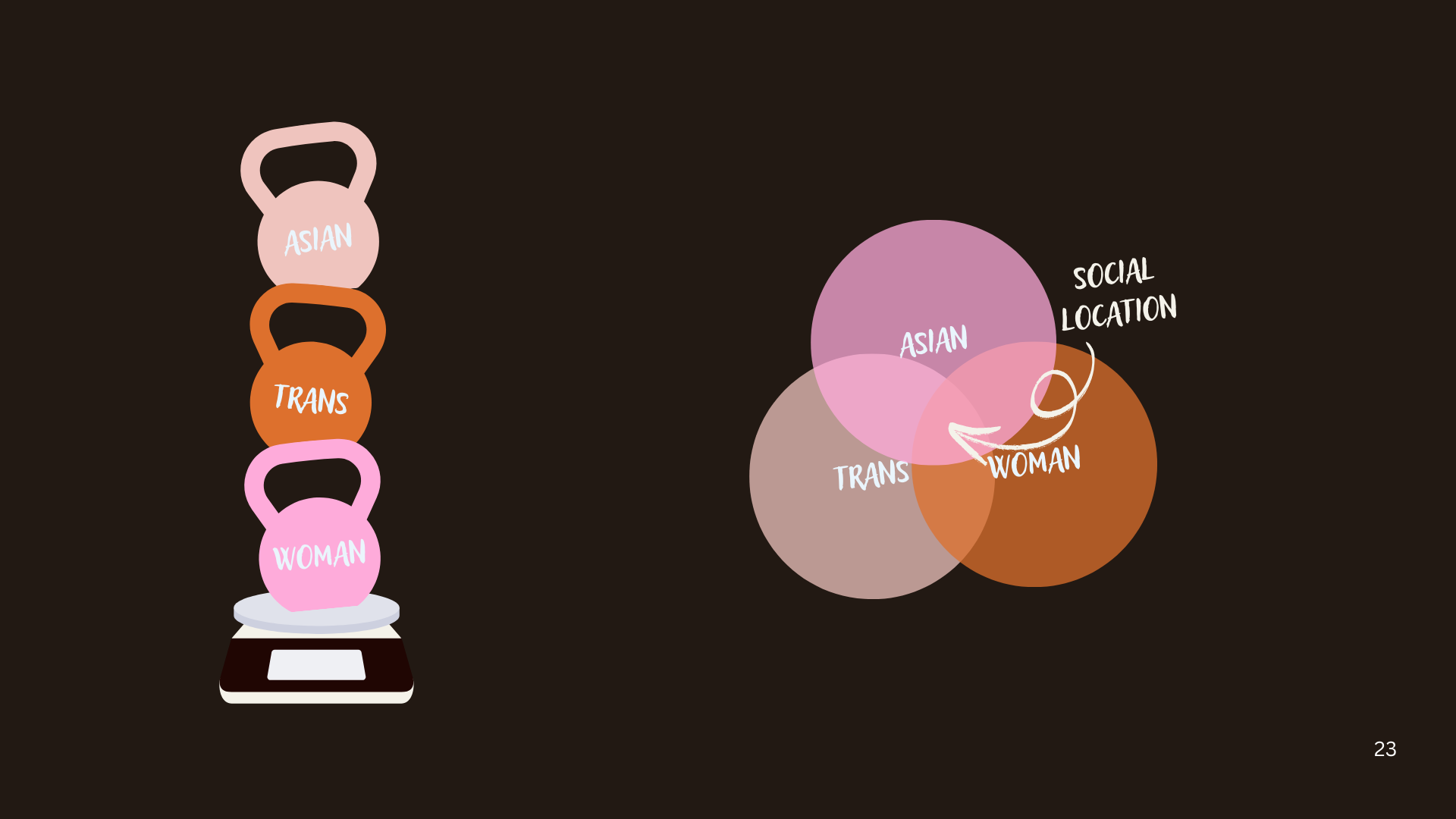
It’s important to understand people’s social location because it gives others context for the challenges they face. It also gives a good idea of what a person’s lived experience is like. So to bring this circle to a close—when people ask me what I plan to do about ICE in my position as both ED of Operations for Transmission Ministry Collective and Director of Operations of Richmond, the answer is absolutely nothing.
The answer is nothing because I already walk around with multiple forms of identification in case I get profiled, arrested, and deported in front of my kids. The answer is nothing because, besides the two white people who have been brutally murdered, seven people of color have been murdered by the US CBP in January alone. The answer is nothing because 37 known transgender individuals lost their lives through violence in the US between November 2024 and November 2025. The answer is nothing because, as per usual, the suffering of the Asian American community is underreported. The answer is nothing because while I wanted to light my first Hanukkah candle, 15 Jewish people were murdered in Australia.
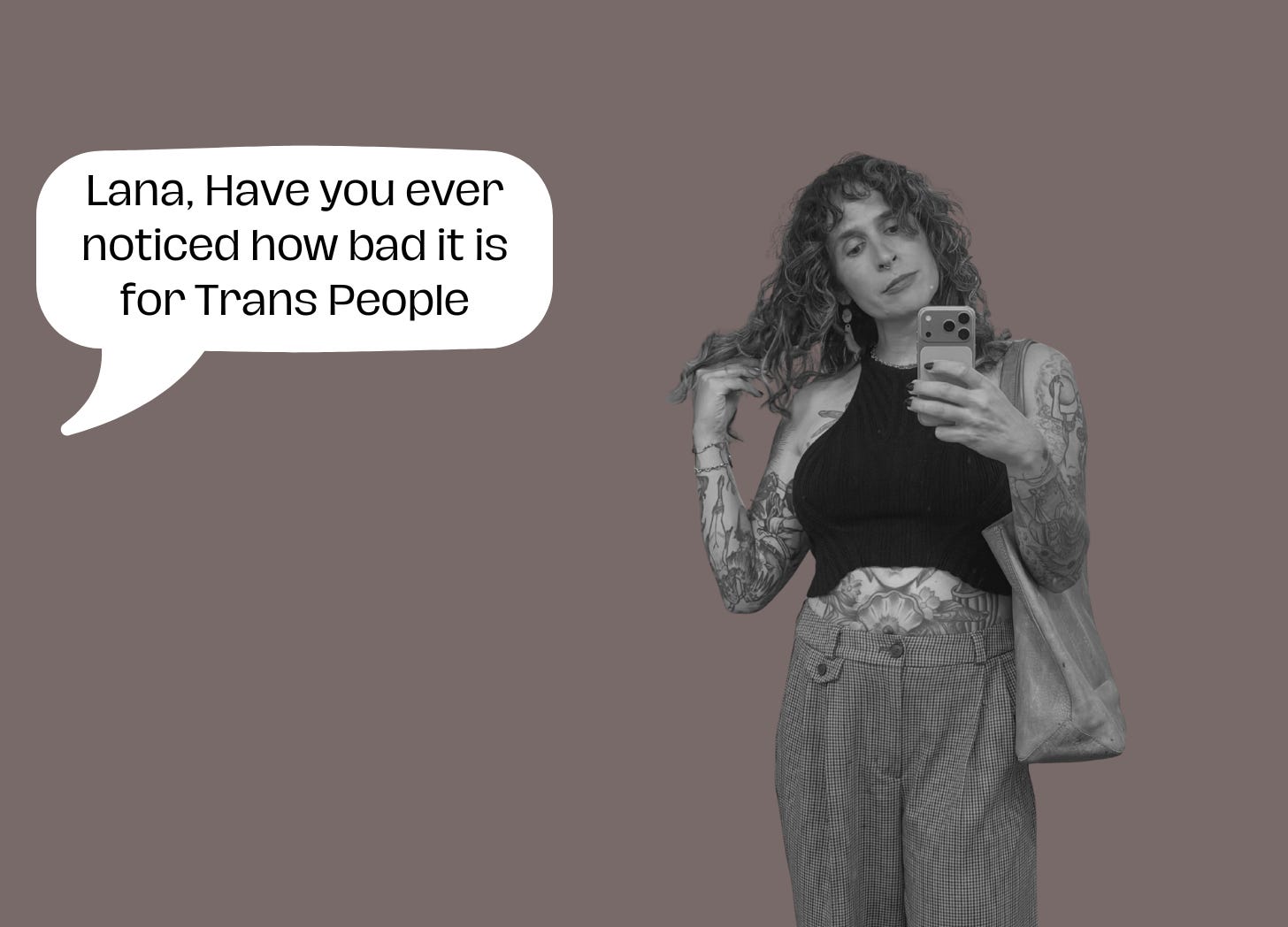
With all of the above in mind, asking me what I intend to do to stop ICE is kind of insulting. Because it looks like every time I’ve been speaking, people were hearing me, but they didn’t listen. You wouldn’t tell a blind person, “Wow, did you ever notice how challenging the world is for blind people?” It’s also interesting to hear privileged people decide what the best course of action is for me without ever asking me. To stay with the example of the blind person, wouldn’t it be odd to pursue legislation to help blind people without ever consulting blind people?”
Yes, I’m salty, very salty, but I don’t want to spend too much time writing about this—Dr. Tamice Spencer Helms does a much better job than I ever could addressing this exact issue.
Doing nothing doesn’t mean that I’m not actively protesting. I stay present, I hold on to joy, and no one can take my identity away from me.
Staying present means that I consciously stay aware of the things directly around me. It means taking care of my body and nurturing it. It means spoiling my kids as much as possible and making sure that my wife gets a lot of us time. It means checking in with my friends, feeding their stomachs and souls. It means praying for the city of Richmond. My friend Chelsea Kim Long has taught me that staying present is such a strong form of protest because it doesn’t throw us into the maelstrom of despair. When we despair, we freeze. When we freeze, we become unable to love our neighbor as ourselves. We become unable to love ourselves.
Staying present is protest. Take a bath or a shower and pamper yourself. If you live with your family, give them an extra hug. Text at least one friend who you know is intersectional and ask them if you can drop off a meal. People can take away our rights, our physical freedom, but let’s not forget to make music, laugh, eat, and create. No one can take that away from us.
Thank God for your salti-ness, Lana!!