

I’m Afraid We Already Live in the Thing We Fear
A loose collection of thoughts I can’t stop having

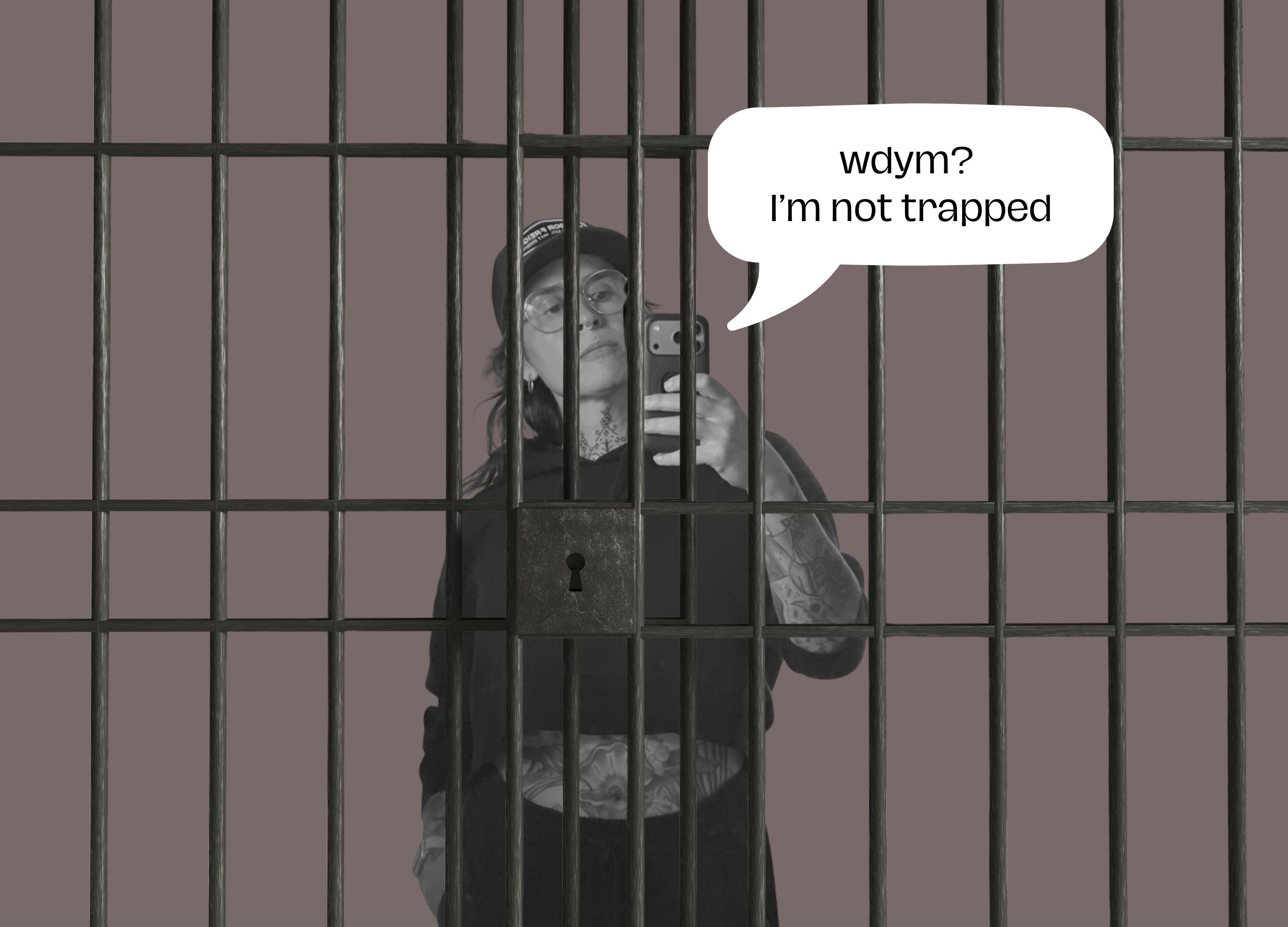
I’ve been thinking about supply chains lately. Specifically, the rare earth mines in Inner Mongolia, the radioactive tailings ponds, and the communities living downstream from the cost of our smartphones. And somehow that thread pulled me all the way to trans athletes, AGI, and why perfectly reasonable people looked away during Nazi Germany.
Bear with me. What follows is quite literally a collection of my scattered thoughts in quick succession.
The Abstraction Layer Problem
We are extraordinarily good at living within systems that harm us without recognizing them at all. What modernity did was add abstraction layers, like supply chains, algorithms, and financial instruments, that make the systems harder to see.
When you hold a smartphone, you are holding the output of a system that includes radioactive waste, exploited labor, and geopolitical dependency on materials controlled by a small number of nation-states. We both know this, vaguely, and then we both keep scrolling.
The price we pay for a phone only works because enormous real costs have been offloaded onto ecosystems and communities that don’t have a political voice. The problem is the upstream of our choices.
And I just can’t stop thinking about how we built the upstream, keep building it, and mostly shrug.
On Being the Product
People have known for years that they are the product on platforms like Facebook and Google. For those who’ve been sleeping under a rock: we are not Meta’s clientèle; we are Meta’s product, and the advertisers are the true clientèle, which is not hidden information.
I used to think this was a failure of consumer education, but now I think it’s something else entirely. By the time the Faustian bargain was legible, Facebook was where your grandmother posted photos and Google was how you got anywhere. Exit costs became social costs. You weren’t just leaving a service; you were leaving a communications layer that had quietly become a load-bearing infrastructure for your actual relationships.
Network effects are deeply anti-innovative. They make it structurally irrational to adopt a better alternative if the people you need to reach are still on the incumbent platform. So we stay and the system grows more entrenched around our staying.
The AGI Displacement
The part of all this that genuinely keeps me up at night is the Artificial General Inteligence (AGI) question. People are afraid of AGI, specifically:
A system that optimizes for its own goals rather than human flourishing
A system that surveils and predicts human behavior at scale
A system that concentrates power in ways that make democratic accountability impossible
A system that humans become dependent on and cannot exit
And then they open Instagram and like my reels.
What we fear about AGI is already here, not as a general intelligence but as a collection of narrow ones. Recommendation algorithms that optimize for engagement over well-being. Financial systems that operate faster than human oversight can follow. Supply chains that have their own logic now, independent of any individual human decision. Platforms that have made themselves so structurally necessary that exit feels impossible.
We are afraid of the vivid science-fiction version of this problem while living quite contentedly inside the mundane, actual version.
Hannah Arendt’s observation about the banality of evil feels exactly right here: atrocity doesn’t require monsters, it requires bureaucrats, people doing their jobs, following procedures, and not asking the question that would make their lives harder.
The Sports Digression That Isn’t a Digression
As a trans woman, I want to use the ongoing panic about trans athletes as a case study in how systems think.
The stated concern is fairness in competition. However funding, nutrition, and coaching access all create advantages orders of magnitude larger than anything hormonal, and we don’t just tolerate those, we celebrate them as the American dream in action.
So the argument isn’t doing logical work; it’s doing identity-boundary work, and trans athletes became a face, a legible threat, onto which a pre-existing discomfort could be projected and organized around.
What would sport look like if we genuinely designed it for equity rather than just naturalizing existing biological variation? What if we organized competition differently, rather than by a gender binary that doesn’t actually map cleanly onto athletic advantage anyway?
We don’t ask this because asking it would reveal that the entire edifice of competitive sport is built on celebrating certain kinds of difference while pathologizing others. The system doesn’t want that question and so it produces a face instead, letting us debate the face rather than the architecture.
Systems generate faces to protect their load-bearing walls.
Why Good Arguments Make Things Worse
When information threatens a person’s identity or social belonging, the brain treats it as danger. This means that a perfectly constructed argument can actually increase entrenchment if it arrives before the relational groundwork is laid. Your good argument becomes training data for a better counter-argument.
Polarization understood this before the rest of us did, or rather, polarization is this, scaled and monetized. Platforms profit from the back-and-forth. Political identities organize around having an enemy. The righteous callout, the viral takedown, the perfectly devastating response are all inputs into a machine that doesn’t care who wins the individual exchange.
Which puts people like me, people whose existence is politically contested, who have real stakes in these arguments, and who are genuinely harmed by bad policy, in an impossible position. I either fight the way the system wants and feed it or I refuse to fight and lose altogether.
The Practice
I’ve been developing something I’m calling relational-first engagement. It’s less a strategy than a commitment, and the idea is simple even when it’s hard: relationship before argument, presence before performance, human before symbol.
Facts just land differently when they come from someone you trust and feel seen by. The sequence matters: connection first, then information. This is both kinder and neurologically more accurate about how minds actually change.
It also means refusing to let my opponents choose the frame. When someone wants to debate trans athletes, the move isn’t to win that debate on its terms but to gently expose that the terms themselves are doing the real work: I notice we’re talking about fairness in a pretty narrow way. Want to talk about what fairness actually means?
For those who know how IG growth works, this stunts my growth on platforms optimized for outrage. I’ve mostly made my peace with that.
What This Has To Do With Uncertainty
All of it, the supply chains, the AGI fear, the sports panic, the polarization machine, points toward the same underlying hunger: the need to resolve uncertainty into a stable system, and then defend that system against all evidence.
We build frames, the frames start serving themselves, and challenges to those frames get treated as existential threats rather than invitations.
The conservative and the progressive are both, at their worst, people who found an answer and stopped asking questions. And I say this as someone with strong convictions, strong enough that I live with real consequences for them. I’m arguing for something harder than spineless centrism: staying in the questions even after you’ve committed to action, holding your convictions and remaining genuinely open to being wrong about them.
This is a practice, not a position, and the moment you become comfortable with your discomfort, you’ve probably stopped practicing it.
I don’t know where this ends, and I think that’s the point.
We already live in the thing we fear, and the question isn’t whether the system will come for us; it already has, in forms we’ve mostly normalized. The question is whether we can stay human, relational, and genuinely curious within that reality, rather than harden into the mirror image of what opposes us.
I’m trying, some days better than others.